Asset Reports
Four reports for monitoring fixed assets and depreciation.
| Report | In one line |
|---|---|
| Fixed Asset Register | Cost, accumulated depreciation and NBV |
| Asset Movement (NBV) | Opening → additions → depreciation → disposals → closing |
| Depreciation Schedule | Book depreciation posted per period |
| Income-Tax Depreciation | Nepal pooled (block) tax statement |
Fixed Asset Register
A record of the business's fixed assets.
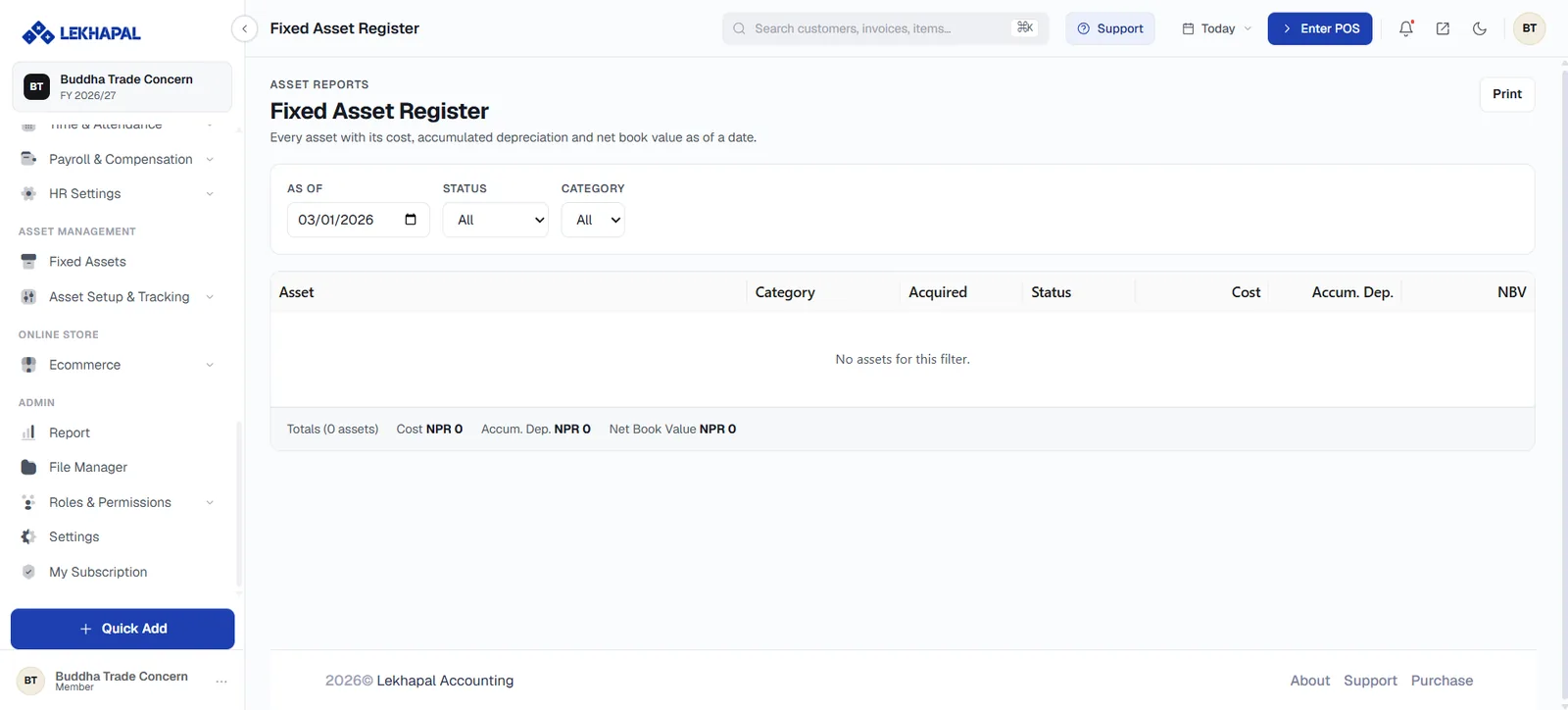
It includes
- asset cost,
- accumulated depreciation,
- Net Book Value (NBV) — cost less accumulated depreciation.
Example. A company buys a computer for Rs. 100,000. The register tracks that asset and its declining value over time.
Asset Movement (NBV)
Changes in an asset's net book value across the period.
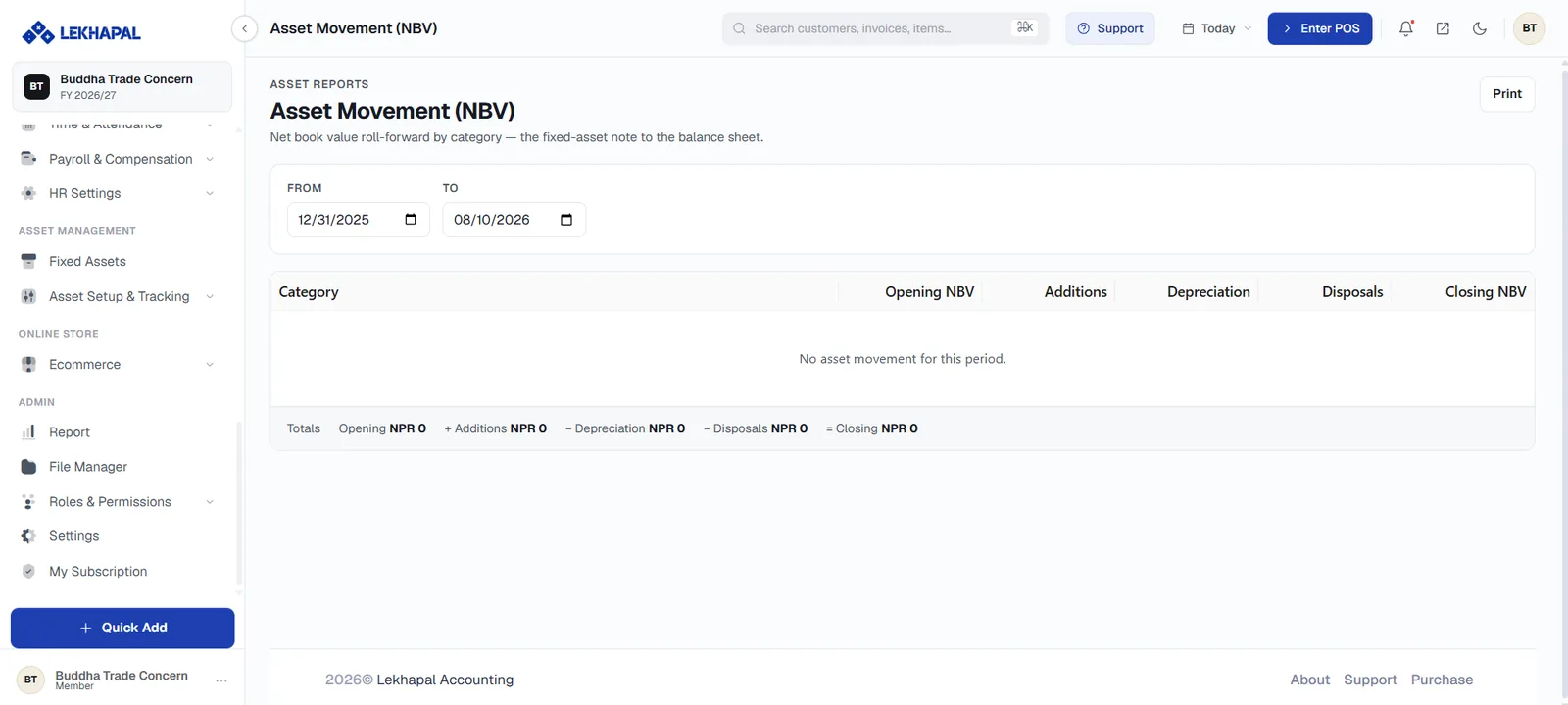
The movement runs:
Opening → Additions → Depreciation → Disposals → Closing
It answers "why is the asset figure on the balance sheet different from last year?" in a single line per asset.
Depreciation Schedule
The depreciation recorded against assets in each period.
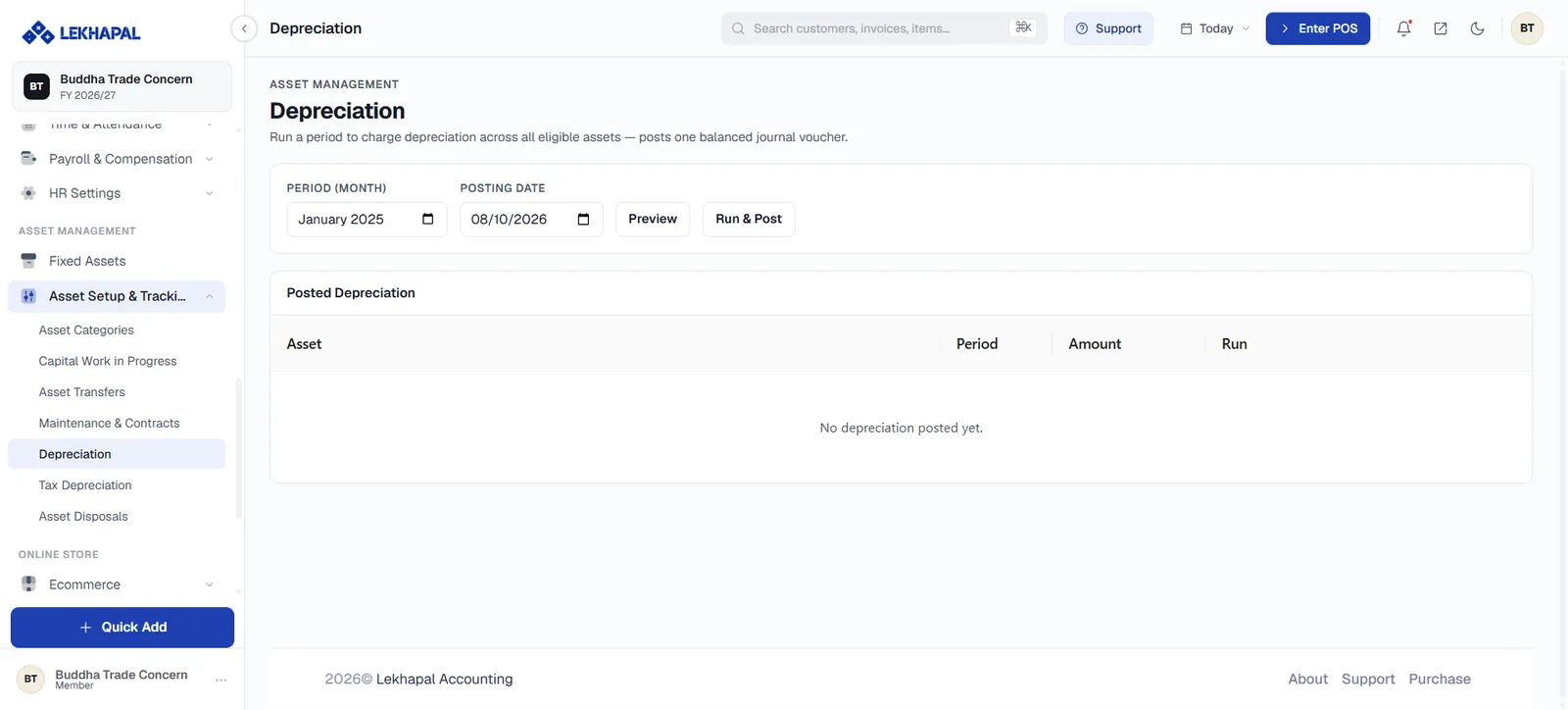
Use it to track the depreciation expense associated with fixed assets — the figure that appears on your Income Statement.
Income-Tax Depreciation
Depreciation calculated under the Nepal income-tax rules, using the pooled (block) method.
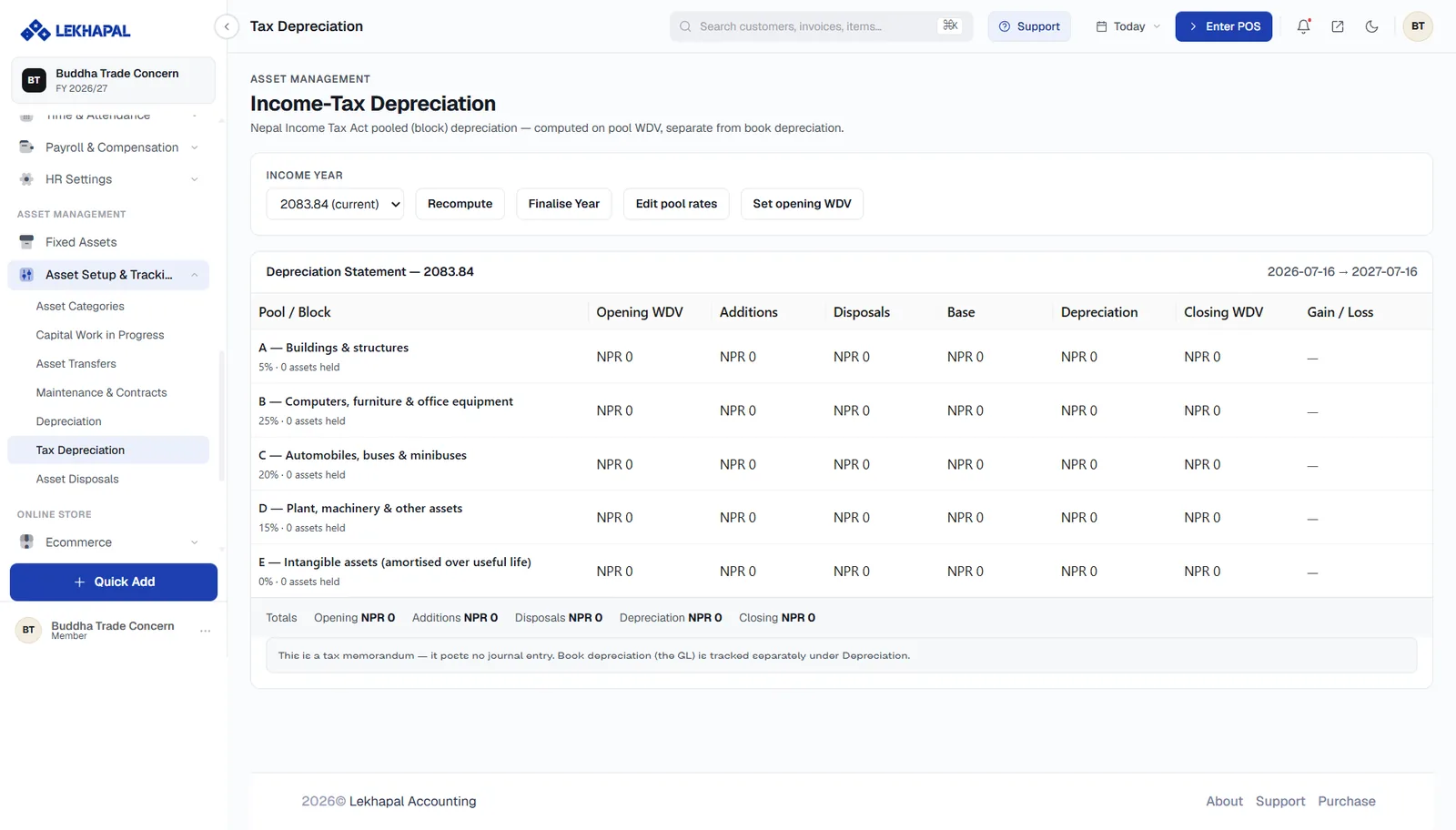
This is the depreciation statement used for income-tax purposes.
Book and tax depreciation differ
The Depreciation Schedule shows depreciation as recorded in your books. This report shows it as the tax authority calculates it. The two will not match, and are not supposed to.